

Warm bread. Coffee is just ground. Simmering tomatoes.
Freshly baked.
Freshly roasted.
Freshly harvested.
Freshly brewed.
Freshly made.
Fresh is not a word. It’s a feeling.
Fresh can’t be faked. When something is fresh, you don’t need convincing. Our senses recognize it before our brain does.
In a vineyard, a grape variety tastes different depending on the climate and soil of that year. You’re not just drinking wine; you’re tasting time, place, and craft. The wine feels alive in a way that a mass-produced bottle on a supermarket shelf rarely does.
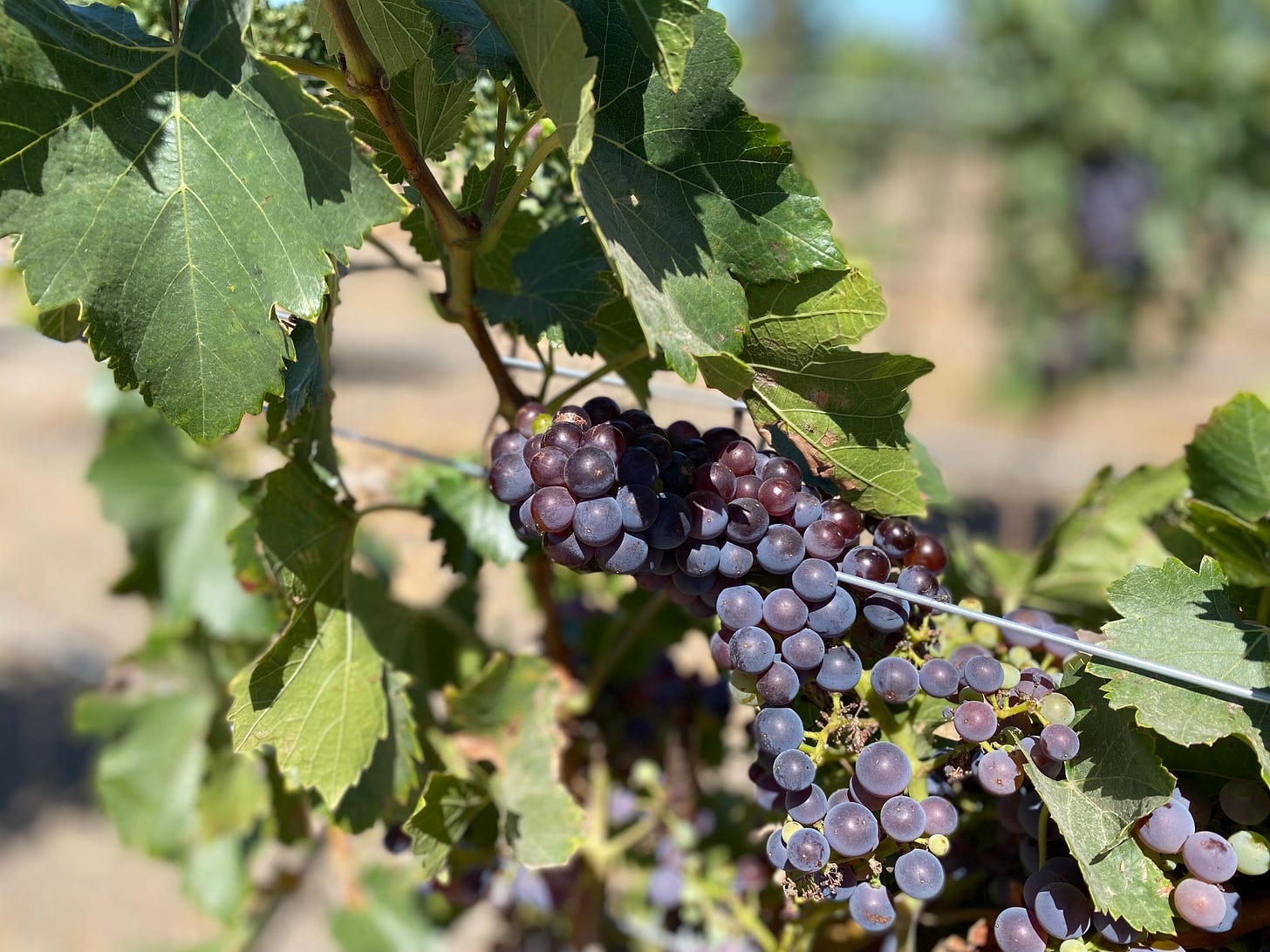
Napa Valley. 2021
One of the most telling cultural shifts of our time has been the resurgence of farmers’ markets. Once a way of life, they were gradually replaced by the convenience of supermarkets. In recent years, they’ve re-emerged as a premium weekend ritual.



NYC Farmers' Markets 2025
They’re not just places to shop, they’re places of sensorial immersion. You smell the basil before you buy it. You see soil still clinging to carrots. You talk to the person who grew your tomatoes. There’s color, imperfection, and seasonality.
Freshness has quietly become an aspiration. A weekend ritual.
We prioritize taste, nutrient density, produce harvested at peak ripeness. We may not articulate it as such or even cognitively recognize it that way. But that’s what fresh means for us.
But here’s what’s strange.
We obsess over freshness in food, but almost never question it in skincare. Especially since skin, is our largest organ.
Fresh in skincare.
You’ve probably seen soaps and candles at farmers’ markets. But beyond the charm of something hand-made, there’s a deeper idea worth paying attention to: freshness isn’t just about how something feels; it’s about how well it performs.
We look for claims, names, percentages, actives, and reviews.
But we rarely ask:
How alive are these ingredients right now?
In skincare, performance isn’t about higher percentages or stronger actives. It’s about whether the ingredients are still biologically alive. It matters because your skin absorbs biologically available ingredients.
Freshness and performance aren’t opposites. Often, they’re deeply connected.
Many ingredients have a bioactive window: a period when their antioxidants, fatty acids, and phytonutrients are most vibrant.
That’s not a bug. It’s a feature.
Think about bread. If you had the choice, you’d pick the loaf baked this morning, not the one engineered to last weeks on a shelf.
Or juice. Freshly pressed versus bottled with stabilizers, added flavors, and colors. One lasts longer. The other does more.
Skincare isn’t very different.
To make products last for years, formulas are refined, stabilized, and deodorized. Shelf life becomes the priority because good economics demand it. But what’s good for storage isn’t always what’s most alive for skin.
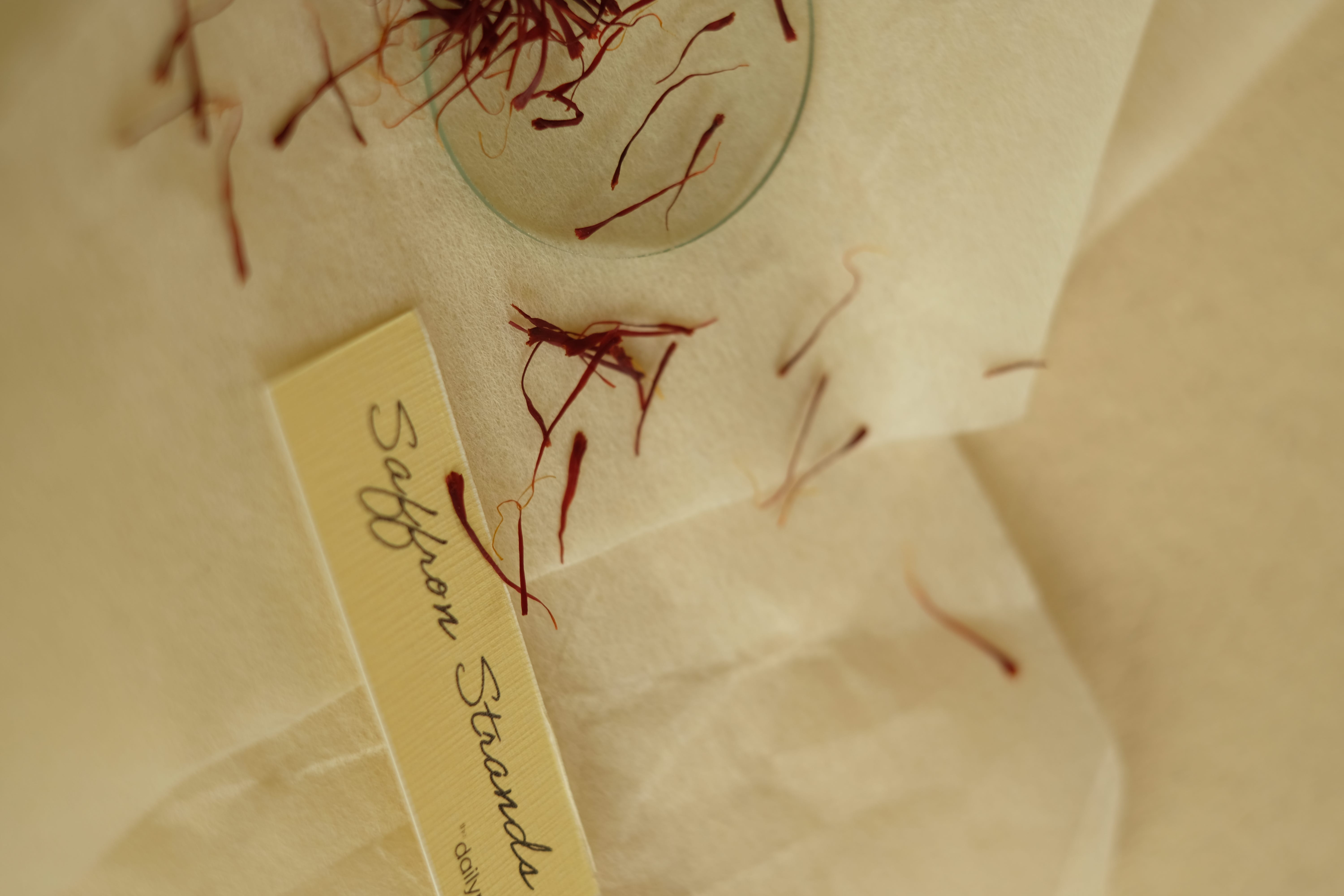
Think about saffron the way you'd think about the most precious ingredients in fine dining. It's not just a flavor, it's a living compound with an expiration date.
Crocin is one of the three main active compounds alongside picrocrocin (taste) and safranal (aroma). Crocin acts as a potent antioxidant, penetrating deep into skin layers, reducing inflammation, neutralizing free radicals, and building resilience against environmental stressors.
But here's what separates a real, bioactive saffron oil from a synthetic knockoff: crocin is delicate. At room temperature, potency reduces to half by 4 months. It's like working with fresh ingredients instead of shelf-stable preservatives in cooking. Yes, a synthetic anti-inflammatory might last forever in a bottle, stable and inert. But it also won't have the bioactivity that allows crocin to work with your skin's natural processes.

How crocin potency in saffron declines over time. Bachir-Bey et al., Molecules (2022), study on crocin degradation during storage.
This is common across all bioactives. Let’s look at carotenoids. It’s a popular active in anti-aging routines, and is found in products ranging from face oils and creams to serums.
Carotenoid skin products leverage antioxidants to protect against UV damage, reduce inflammation, and enhance skin hydration.
Your carotenoid skincare product loses approximately 6-10% of its potency each month at room temperature. This means a serum that was highly effective on day one is delivering significantly diminished results by month six. That’s why manufacturing date and expiry date matter . Today the industry shelf life is a minimum of 3 years. Which means you’re essentially using an inactive product.

How carotenoid potency reduces over time. Bachir-Bey et al., Molecules (2022)
Real ingredients have lifespans. That’s what makes them real.
Freshness doesn’t disappear overnight. And it doesn’t last forever. It fades slowly, quietly. But in the window when ingredients are still alive, they can support skin gently, consistently, and intelligently.
If you care about fresh food, you should care about it in skincare. Your skincare should have the same standards as your food.
Once you start noticing it in food, in markets, in the way something smells or feels in your hands, it becomes hard to ignore everywhere else.
Including your skincare.